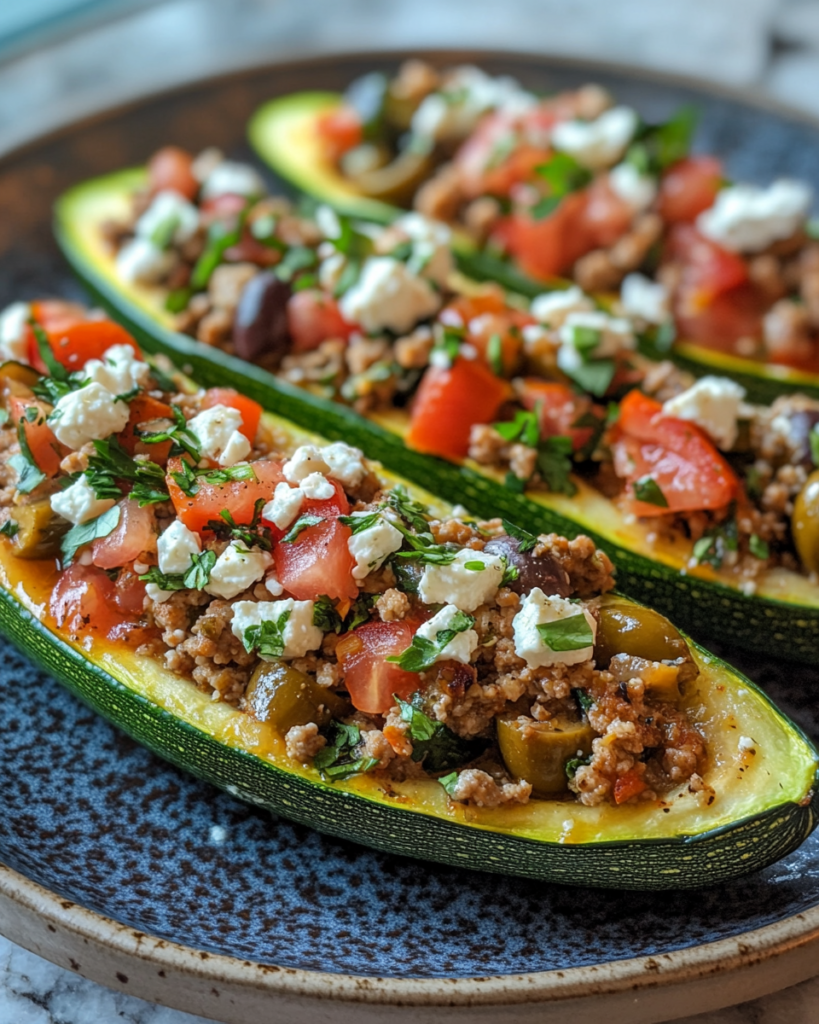
Fresh zucchini filled with a savory Mediterranean-inspired mixture creates a baked dish that carries rich aromas, tender texture, and balanced flavor in each portion. Mediterranean Stuffed Zucchini Boats present a combination of vegetables, herbs, olive oil, grains, and cheese baked until tender and lightly browned on top. Each zucchini half forms a natural vessel that holds a warm filling infused with garlic, onion, tomatoes, and herbs.
This preparation works well as a main dish or side dish, offering versatility across different dining settings. The baking process allows the zucchini to soften while absorbing surrounding flavors from the filling. The topping develops a lightly golden surface, adding contrast against the soft interior.
Mediterranean Stuffed Zucchini Boats fit into casual meals, family gatherings, or shared platters. The structure of the dish allows easy portioning while maintaining a visually appealing presentation. Each element contributes to a balanced combination of texture and aroma.
Ingredients Overview
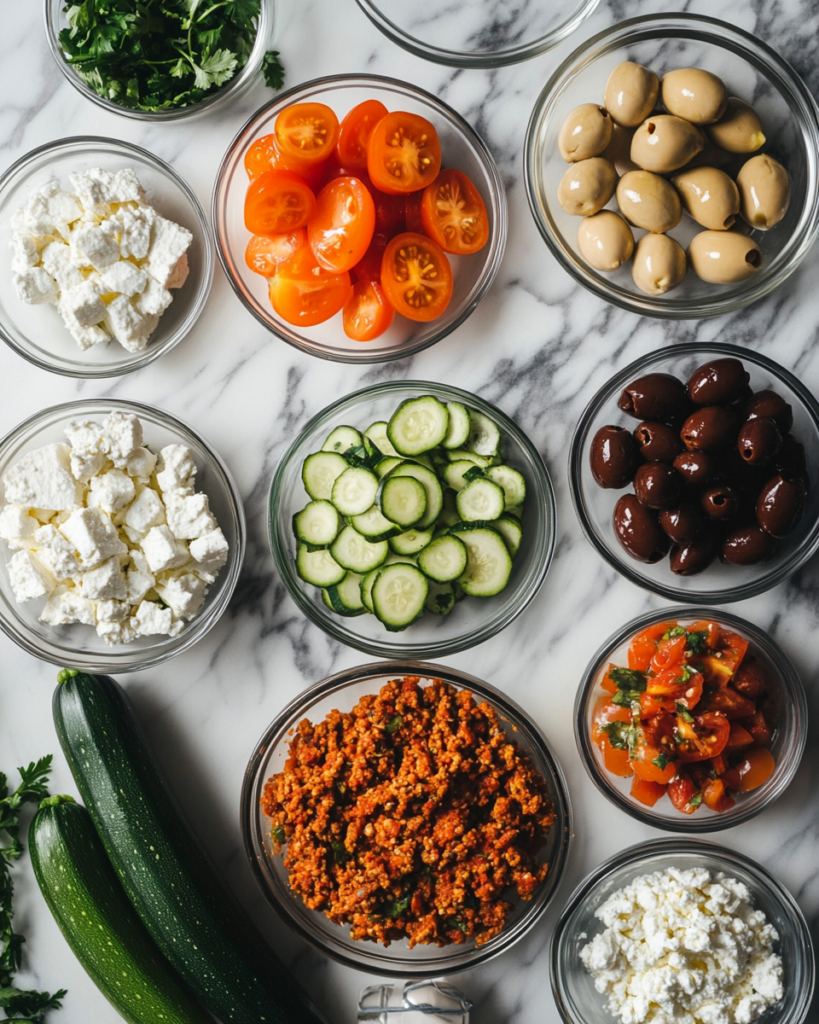
Zucchini forms the foundation of this dish. Its mild taste and tender flesh allow it to carry stronger Mediterranean flavors without overpowering the filling. When baked, zucchini becomes soft yet still maintains structural integrity, making it suitable for stuffing.
Olive oil plays an essential role in both flavor and texture. It helps sauté aromatics while adding a smooth richness that ties the filling components together. Onion and garlic provide depth and fragrance, forming the base layer of the mixture.
Tomatoes contribute acidity and moisture, preventing the filling from becoming dry during baking. Their natural juices blend with grains and herbs, forming a cohesive mixture that stays tender inside the zucchini shells.
Cooked rice or quinoa acts as a binding component. It absorbs surrounding flavors while adding body to the filling. Herbs such as oregano, parsley, and basil bring aromatic brightness that reflects Mediterranean cooking traditions.
Cheese, often feta or mozzarella, adds creaminess and a slightly salty profile. It melts gently during baking, forming a light topping layer that complements the vegetables. Optional additions such as chickpeas or olives contribute extra texture and savory depth.
Each ingredient works in harmony, creating a filling that is aromatic, moist, and balanced in flavor.
Ingredients
4 medium zucchini
2 tablespoons olive oil
1 small onion, finely chopped
3 cloves garlic, minced
1 cup cooked rice or quinoa
1 cup diced tomatoes
1/2 cup crumbled feta cheese
1/4 cup grated mozzarella cheese
2 tablespoons chopped fresh parsley
1 teaspoon dried oregano
1/2 teaspoon salt
1/4 teaspoon black pepper
1/4 cup chopped black olives (optional)
1/4 cup cooked chickpeas (optional)
1 tablespoon lemon juice
Step-by-Step Instructions
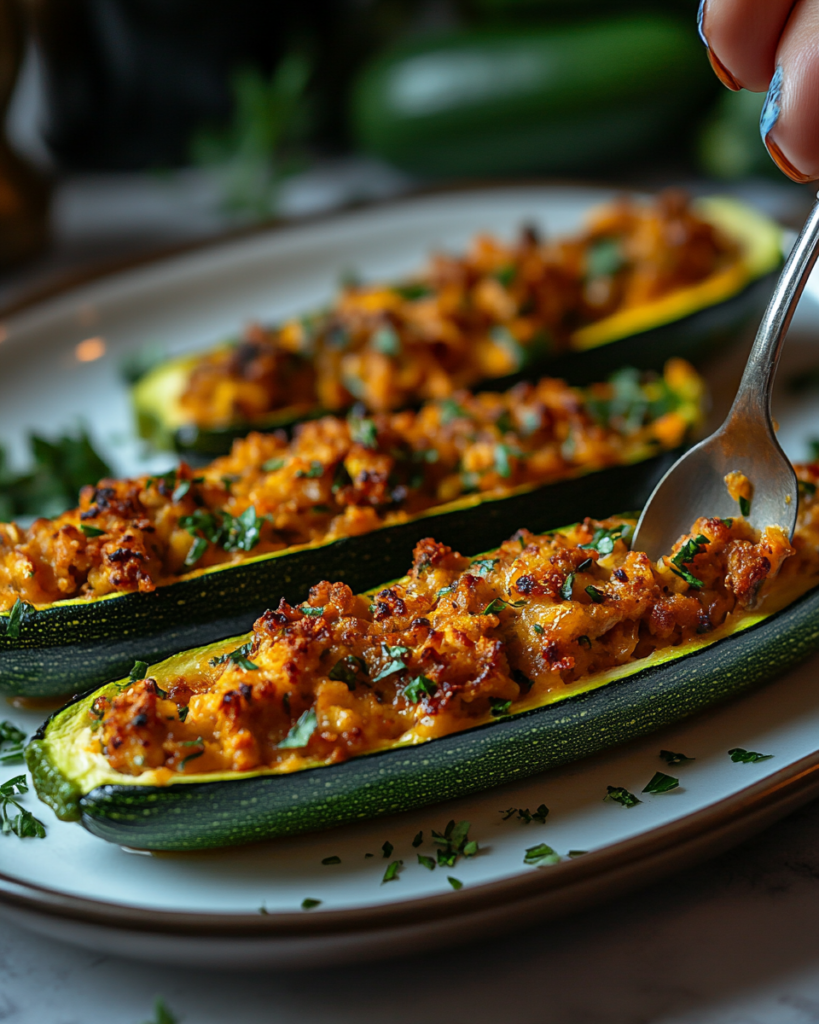
Begin by preparing the zucchini. Each zucchini is sliced lengthwise, creating two equal halves. The inner flesh is gently scooped out, leaving a thin shell that holds the filling. The scooped flesh can be chopped and reserved for later use in the mixture.
A baking tray is lightly brushed with olive oil to prevent sticking. The zucchini halves are placed cut side facing upward. A light coating of olive oil is brushed over the surface, followed by a short pre-bake period at moderate oven temperature until slightly softened.
While zucchini softens, preparation of the filling begins. A skillet is heated with olive oil. Finely chopped onion is added and cooked until translucent and aromatic. Minced garlic follows, releasing fragrance as it cooks briefly without browning.
Diced tomatoes are added to the skillet along with reserved zucchini flesh. The mixture is stirred gently until moisture reduces slightly. Cooked rice or quinoa is then incorporated, absorbing the tomato juices and forming a cohesive mixture.
Herbs, salt, black pepper, olives, chickpeas, and lemon juice are added. The mixture is stirred until evenly distributed. Heat is reduced to allow flavors to combine naturally.
Once filling preparation is complete, each zucchini half is filled generously. The mixture is pressed lightly to ensure stability. Crumbled feta and grated mozzarella are sprinkled over the top layer.
The baking tray is returned to the oven. Baking continues until zucchini becomes tender and the cheese on top melts and develops a light golden surface. Aroma becomes pronounced during this stage, indicating completion.
After baking, the tray is removed and allowed to rest briefly. This resting period helps stabilize the filling and allows flavors to settle before serving.
Tips, Variations & Substitutions
Zucchini size affects cooking consistency. Medium-sized zucchini provides balanced structure and even baking. Larger zucchini may require extended baking duration to reach proper tenderness.
Rice can be substituted with quinoa, couscous, or bulgur depending on texture preference. Each grain introduces slightly different absorption qualities and mouthfeel.
Cheese selection can be adjusted. Feta provides tangy saltiness, while mozzarella offers mild creaminess. A combination of both creates layered flavor depth.
Additional vegetables such as diced bell peppers or spinach can be incorporated into the filling for added texture variation. These additions integrate smoothly into the tomato base.
For a richer profile, roasted pine nuts can be added to the filling after cooking. This introduces subtle crunch and nutty aroma.
Herb selection can shift flavor direction. Dill or mint introduces freshness, while thyme adds earthier undertones.
Serving Ideas & Occasions
Mediterranean Stuffed Zucchini Boats pair well with simple side salads composed of cucumbers, tomatoes, and olive oil dressing. Light grain-based sides also complement the dish.
A bowl of yogurt or tzatziki-style sauce can be served alongside for added creaminess. Bread such as warm pita or rustic slices works well for accompanying the filling.
This dish fits lunch or dinner settings and can be served as a centerpiece or shared platter. It is suitable for gatherings where vegetable-based meals are preferred.
The portioned structure makes it convenient for serving multiple guests without complex plating.
Nutritional & Health Notes
Zucchini provides hydration and fiber while remaining low in calorie density. The vegetable base contributes vitamins such as vitamin C and potassium.
Olive oil adds monounsaturated fats, which support balanced dietary intake. Garlic and onion contribute natural aromatic compounds that enhance flavor without heavy seasoning.
Tomatoes offer antioxidants such as lycopene, while herbs introduce micronutrients in small amounts. Grain components provide carbohydrates for energy.
Cheese contributes protein and calcium, though quantity can be adjusted based on dietary preference. Chickpeas, when included, add plant-based protein and fiber.
Overall composition creates a balanced combination of vegetables, grains, fats, and protein elements.
FAQs
What type of zucchini works for stuffing?
Medium zucchini with firm skin and minimal seeds works best for stuffing. These zucchini hold structure during scooping and baking. Overly large zucchini may contain excessive moisture and soft seeds that affect filling consistency. Uniform size ensures even baking and stable presentation.
Can grains be replaced in the filling?
Grains such as rice or quinoa can be replaced with couscous, bulgur, or barley. Each alternative provides different texture and absorption characteristics. Couscous creates a lighter filling, while barley offers a chewier bite. Cooking adjustment may be required depending on grain selection.
What cheese works best in this dish?
Feta cheese offers a tangy and salty profile that pairs well with tomatoes and herbs. Mozzarella provides a mild, creamy melt. A combination of both cheeses creates layered texture and flavor. Other cheeses such as ricotta or goat cheese can also be used for variation.
Can the filling be prepared ahead of baking?
The filling can be prepared in advance and stored under refrigeration until assembly. This allows flavors to develop further before baking. Zucchini should be prepared closer to baking to maintain structure and moisture balance. Assembly immediately prior to baking maintains optimal texture.
How can moisture be controlled during baking?
Tomatoes and zucchini release moisture during cooking. Pre-cooking the filling reduces excess liquid. Scooped zucchini flesh should be lightly drained before mixing. Baking at consistent moderate temperature helps evaporation without drying the dish.
Can protein be added to the filling?
Cooked chickpeas, lentils, or finely chopped cooked poultry can be incorporated into the filling. These additions increase protein content and add texture variation. Integration should occur during final mixing to maintain even distribution.
What causes zucchini boats to become too soft?
Excess baking duration or overly large zucchini can lead to soft texture. Pre-baking should be brief, allowing structure to remain intact. Monitoring texture during oven cooking helps maintain balanced firmness without collapse.