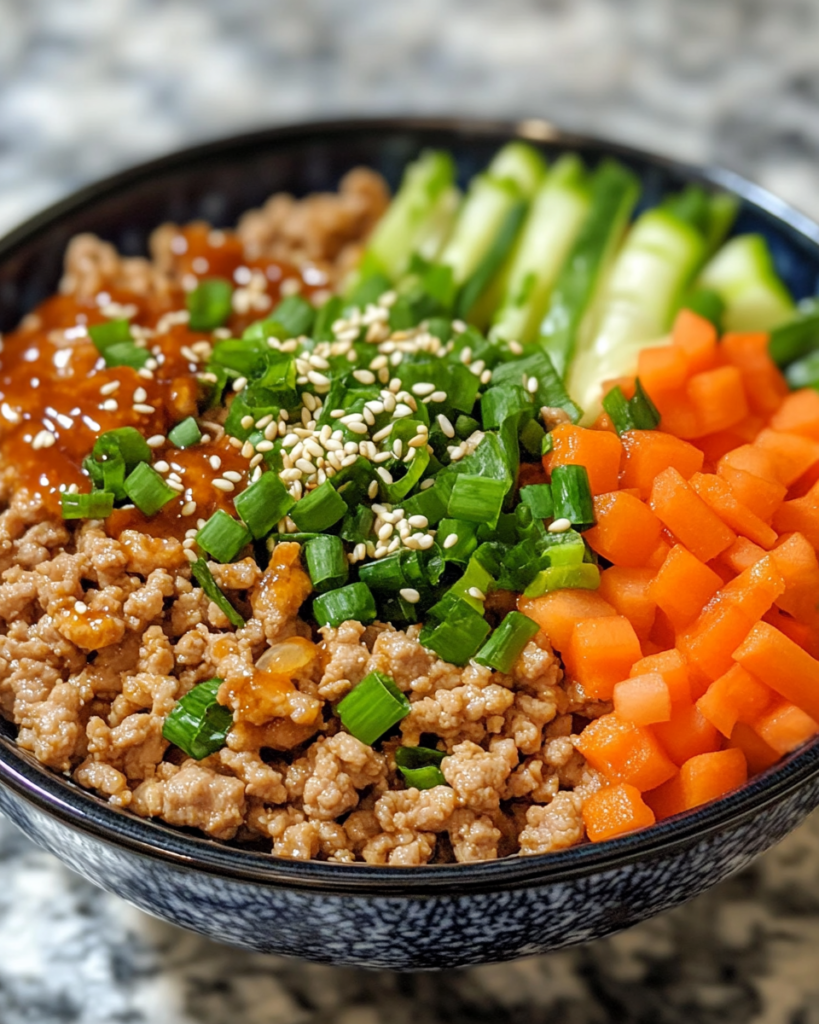
Ground Turkey Egg Roll Bowl brings all the savory flavor of a classic egg roll into a simple skillet dinner that fits busy weeknights. Tender ground turkey cooks with cabbage, carrots, garlic, ginger, and soy sauce for a warm meal with crisp texture and rich flavor in every bite.
This dish has become a favorite in many kitchens because it comes together quickly while still tasting hearty and satisfying. The mixture of fresh vegetables and seasoned turkey creates a balanced bowl that works well for lunch meal prep or a relaxed family dinner.
Unlike deep-fried egg rolls, this version skips the wrapper and keeps the cooking process simple. One large skillet handles nearly everything, which also cuts down on cleanup. The result is a filling bowl with savory notes, gentle sweetness from cabbage and carrots, and a hint of sesame.
Ingredients Overview

The flavor of Ground Turkey Egg Roll Bowl starts with lean ground turkey. Turkey cooks quickly and absorbs seasoning well, giving the bowl a savory base without feeling too heavy. Dark meat turkey adds slightly richer flavor, while lean turkey keeps the dish lighter.
Green cabbage forms the heart of the bowl. As it softens in the skillet, it becomes slightly sweet and tender while still holding a bit of crunch. Coleslaw mix works nicely when short on prep time since it already contains shredded cabbage and carrots.
Carrots bring color and mild sweetness that balances the salty soy sauce. Fresh garlic and ginger create the classic egg roll flavor profile. Fresh ginger gives the strongest flavor, though ground ginger can work in smaller amounts.
Soy sauce adds deep savory flavor. Low-sodium soy sauce keeps the dish balanced without becoming overly salty. A small splash of rice vinegar brightens the skillet mixture, while sesame oil adds warmth and a lightly toasted finish.
Green onions add freshness near the end of cooking. Crushed red pepper flakes can bring gentle heat for anyone who enjoys a spicier bowl. Water chestnuts are another nice addition because they stay crisp and add contrast to the softer cabbage.
This recipe also adapts easily. Ground chicken or pork can replace turkey. Coconut aminos work instead of soy sauce for a slightly sweeter flavor. Bagged broccoli slaw can stand in for cabbage and carrots when needed.
Ingredients
1 pound ground turkey
1 tablespoon olive oil
1 small yellow onion, diced
3 cloves garlic, minced
1 tablespoon fresh ginger, grated
6 cups shredded green cabbage
1 cup shredded carrots
1/4 cup low-sodium soy sauce
1 tablespoon rice vinegar
1 teaspoon sesame oil
1/2 teaspoon black pepper
1/4 teaspoon salt
1/4 teaspoon crushed red pepper flakes
1/2 cup chopped green onions
1 tablespoon sesame seeds
1/2 cup chopped water chestnuts
Step-by-Step Instructions

Place a large skillet over medium-high heat and add the olive oil. Once the oil warms, add the diced onion and cook for about 3 minutes until softened and lightly golden around the edges. Stir often so the onion cooks evenly without browning too quickly.
Add the ground turkey to the skillet. Break it apart with a wooden spoon while it cooks. Continue cooking for about 6 to 8 minutes until the turkey is fully cooked and no pink remains. Small browned bits along the bottom of the pan add savory flavor, though heavy browning can dry the meat.
Stir in the garlic and fresh ginger. Cook for about 30 seconds until fragrant. Garlic burns quickly, so keep the mixture moving in the skillet during this stage.
Add the shredded cabbage and carrots. At first the skillet may seem very full, though the vegetables shrink considerably as they cook. Stir the mixture well so the turkey distributes evenly throughout the vegetables.
Pour in the soy sauce, rice vinegar, and sesame oil. Sprinkle in the black pepper, salt, and crushed red pepper flakes. Stir thoroughly so the cabbage becomes coated with seasoning.
Cook the mixture for another 6 to 8 minutes. The cabbage should soften while still keeping slight texture. Overcooking can turn the vegetables watery and limp, so keep an eye on the skillet during the final minutes.
If using water chestnuts, stir them in during the last 2 minutes of cooking. Their crisp texture works nicely against the tender cabbage and turkey.
Taste the bowl before serving. Add a small splash of soy sauce if a stronger savory flavor is preferred. Scatter chopped green onions and sesame seeds over the top right before serving.
For meal prep, allow the bowl to cool slightly before storing in airtight containers. The flavors deepen nicely after resting overnight in the refrigerator.
One common mistake involves overcrowding the skillet with cold vegetables all at once in a smaller pan. A very crowded skillet traps steam and prevents proper sautéing. Using a wide skillet helps the cabbage cook evenly.
Another issue comes from using very high heat during the entire process. Excess heat can dry the turkey and scorch the garlic before the cabbage softens. Medium-high heat works well from start to finish.
Tips, Variations & Substitutions
Ground Turkey Egg Roll Bowl adapts easily for different tastes and pantry ingredients. A bagged coleslaw mix cuts prep time significantly and still delivers excellent texture. Broccoli slaw also works nicely for a slightly firmer bite.
For extra savory flavor, add a teaspoon of hoisin sauce or a splash of oyster sauce. A drizzle of sriracha adds heat without overpowering the bowl. Chopped mushrooms blend naturally into the skillet and add deeper flavor.
Brown rice or cauliflower rice turns the dish into a larger meal. Crisp wonton strips scattered on top add crunch similar to a traditional egg roll wrapper.
Ground chicken, pork, or finely chopped tofu can replace turkey. Tofu should be pressed well before cooking so it browns properly instead of steaming.
Fresh ginger gives the bowl brighter flavor than powdered ginger, though both work. If using powdered ginger, reduce the amount since dried spices taste more concentrated.
A squeeze of lime right before serving brings brightness that balances the savory sauce. Chopped cilantro can add another layer of freshness for anyone who enjoys herb-forward flavor.
Leftovers reheat well in a skillet over medium heat. Microwaving also works, though a skillet keeps the vegetables from becoming too soft.
Serving Ideas & Occasions
Ground Turkey Egg Roll Bowl fits many occasions because it cooks quickly and stores well. It works especially nicely for weeknight dinners when time feels limited but a warm homemade meal still sounds appealing.
Serve the bowl with steamed jasmine rice, brown rice, or cauliflower rice. Cucumber salad adds cool contrast beside the warm savory skillet mixture. Roasted broccoli or snap peas also pair nicely.
For drinks, sparkling water with citrus keeps the meal light and refreshing. Iced green tea complements the ginger and sesame flavors without overpowering the dish.
This recipe also works beautifully for meal prep lunches. The cabbage stays tender without becoming mushy after refrigeration, which helps the leftovers maintain good texture.
During colder months, the warm skillet mixture feels hearty and comforting. In warmer weather, the lighter ingredients still keep the bowl suitable for casual dinners without feeling overly rich.
Nutritional & Health Notes
Ground Turkey Egg Roll Bowl contains a balanced mix of protein, vegetables, and savory seasoning. Lean ground turkey provides protein that helps the meal feel filling while keeping the bowl lighter than many takeout versions.
Cabbage and carrots contribute fiber along with vitamins and minerals. Since the vegetables cook quickly, they keep pleasant texture and color without becoming overly soft.
This bowl contains fewer fried ingredients than traditional egg rolls because it skips the deep-fried wrapper. Using low-sodium soy sauce helps manage salt levels while still keeping rich flavor.
The recipe also works well for lower-carb meal plans, particularly when paired with cauliflower rice instead of traditional rice. Sesame oil adds rich flavor in a small amount, so the bowl still tastes satisfying without needing heavy sauces.
Portion size can shift easily depending on appetite and serving style. Adding extra vegetables stretches the recipe while keeping it balanced and filling.
FAQs
Can I prepare Ground Turkey Egg Roll Bowl ahead of time?
Yes, this recipe works very well for meal prep. After cooking, allow the mixture to cool slightly before transferring it into airtight containers. Stored in the refrigerator, the bowl stays fresh for about 4 days. The flavors often taste even richer the next day because the ginger, garlic, and soy sauce settle into the cabbage and turkey overnight. When reheating, a skillet gives the best texture since it warms the vegetables without making them too soft. A microwave also works for quick lunches. If preparing several portions for the week, keep garnishes like green onions and sesame seeds separate until serving so they stay fresh and crisp.
Can I freeze this recipe?
Ground Turkey Egg Roll Bowl can be frozen, though the cabbage texture softens slightly after thawing. For best results, cool the cooked mixture fully before placing it into freezer-safe containers or bags. Freeze for up to 2 months. Thaw overnight in the refrigerator before reheating. A skillet over medium heat helps remove extra moisture and brings back better texture compared to microwaving straight from frozen. Some people prefer adding freshly shredded cabbage during reheating for a bit more crunch. The turkey and seasoning freeze very well, making this a convenient option for future dinners during busy weeks.
What type of cabbage works best?
Green cabbage remains the most common option because it softens nicely while still holding a little texture. Napa cabbage gives a more delicate texture and slightly sweeter flavor. Purple cabbage also works and adds beautiful color, though it can slightly tint the dish. Bagged coleslaw mix is one of the easiest choices because it combines cabbage and carrots in one package. Whichever type you choose, avoid overcooking it. The vegetables should become tender while still keeping slight bite. Very soft cabbage can make the bowl feel watery instead of balanced and hearty.
Can I make this recipe spicy?
Yes, the heat level can shift easily. Crushed red pepper flakes provide mild warmth, though extra flakes create a stronger kick. Sriracha, chili garlic sauce, or diced fresh jalapeños also blend nicely into the skillet mixture. Adding spicy ingredients gradually works best since the heat becomes stronger as the dish cooks. A drizzle of spicy sauce right before serving allows everyone to adjust their own bowl. If serving children or anyone sensitive to spice, prepare the main skillet without extra heat and place hot sauces on the table separately. This keeps the meal flexible for different preferences.
What can I serve with Ground Turkey Egg Roll Bowl?
Rice remains one of the most common pairings because it balances the savory flavor of the bowl. Jasmine rice, brown rice, and cauliflower rice all work nicely. Steamed edamame, roasted broccoli, or cucumber salad also pair well beside the warm turkey mixture. Some people enjoy adding crispy wonton strips or chopped peanuts for extra crunch. Since the recipe already contains protein and vegetables, it can stand alone as a full meal too. Light drinks such as green tea or citrus sparkling water complement the ginger and sesame flavors without overwhelming the dish.
Can I use another protein instead of turkey?
Absolutely. Ground chicken works very similarly and keeps the bowl light. Ground pork creates a richer flavor that tastes very close to restaurant-style egg rolls. Crumbled tofu gives a vegetarian option, especially when pressed well before cooking. Finely chopped shrimp also cooks quickly and pairs nicely with cabbage and ginger. Regardless of the protein used, the cooking process remains nearly the same. Just watch cooking times carefully because smaller proteins such as shrimp cook much faster than turkey. The savory sauce mixture complements many proteins, making this recipe very flexible for different households.
Why did my bowl turn watery?
Watery texture usually comes from overcrowding the skillet or overcooking the cabbage. Cabbage naturally releases moisture while cooking, particularly when packed tightly into a small pan. A large skillet helps excess moisture evaporate instead of collecting at the bottom. Cooking over medium-high heat also helps maintain better texture. Another factor involves salt. Adding too much salt early in the cooking process can draw additional moisture from the vegetables. If the bowl still becomes watery, continue cooking for another few minutes while stirring occasionally. The extra liquid should reduce naturally as the skillet stays uncovered.