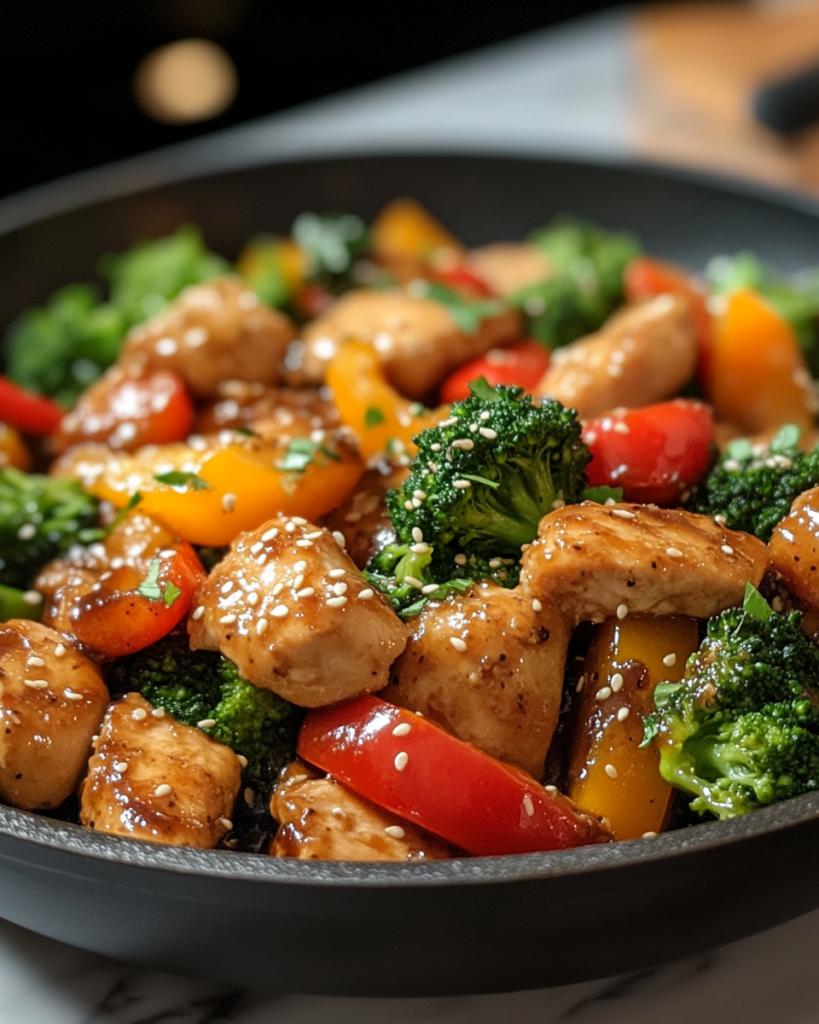
Teriyaki Chicken Stir Fry combines tender chicken, crisp vegetables, and a savory homemade sauce in one colorful skillet meal. The balance of soy sauce, garlic, ginger, and a touch of sweetness creates rich flavor without complicated preparation. Served over warm rice or noodles, this dish fits busy evenings while still feeling satisfying and fresh.
The chicken cooks quickly at high heat, helping it stay juicy while the vegetables remain slightly crisp. Homemade teriyaki sauce coats every ingredient with glossy flavor that pairs beautifully with broccoli, carrots, peppers, and snap peas. This recipe also works well for weekly meal preparation since the ingredients reheat nicely.
Teriyaki Chicken Stir Fry comes together using pantry staples and fresh vegetables that are easy to find year-round. The result is a warm and hearty dinner with balanced flavor and texture.
Ingredients Overview
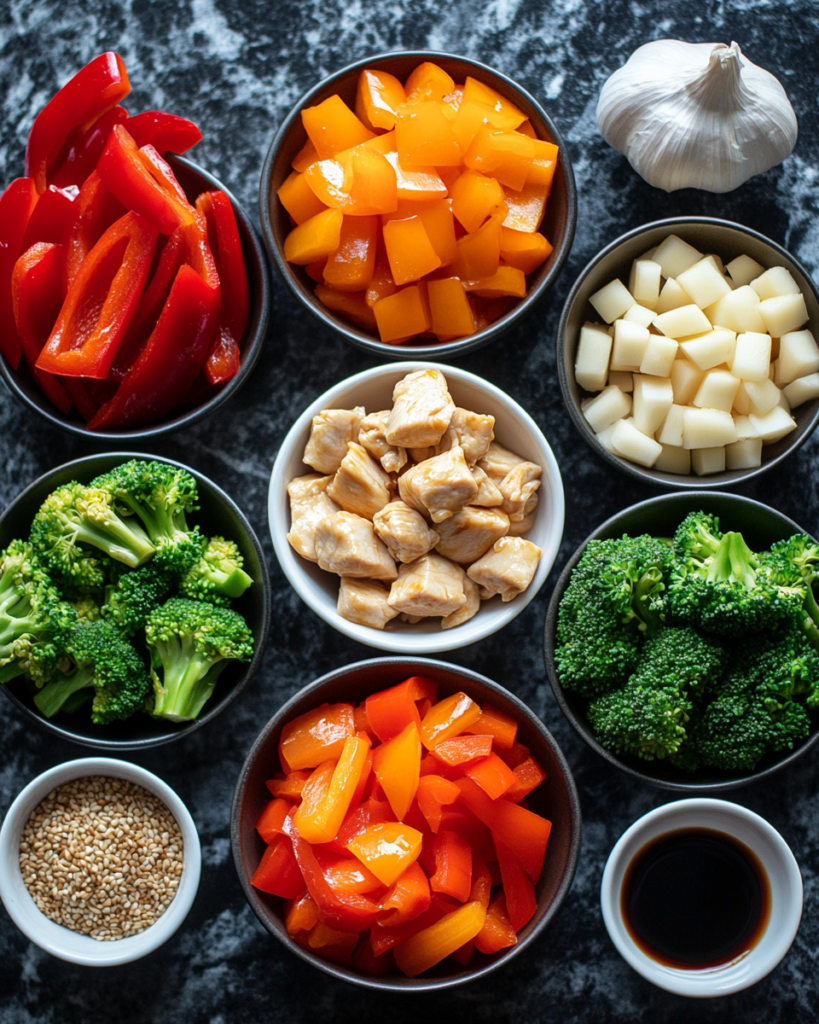
Chicken breast works especially well for stir fry because it cooks quickly and absorbs the savory teriyaki sauce beautifully. Chicken thighs may also be used for a slightly richer texture. Thin slices help the chicken cook evenly while keeping the meat tender.
Soy sauce forms the foundation of the teriyaki mixture. Low-sodium soy sauce helps balance the seasoning without becoming overly salty. Garlic and fresh ginger bring warmth and depth that pair naturally with the sweet and savory sauce. Fresh ginger creates brighter flavor compared to powdered ginger.
Brown sugar gives the sauce its signature sweetness and glossy finish. Honey may replace brown sugar for a softer sweetness. Rice vinegar adds gentle acidity that balances the richer ingredients.
Cornstarch thickens the sauce slightly so it clings to the chicken and vegetables evenly. Sesame oil adds nutty flavor near the end of cooking. A small amount goes a long way because the flavor is fairly strong.
Broccoli, bell peppers, carrots, and snap peas bring texture and color to the dish. These vegetables stay slightly crisp after cooking, which creates contrast alongside the tender chicken. Mushrooms, zucchini, or baby corn may also work nicely depending on personal preference.
Rice or noodles pair beautifully with the savory sauce and complete the meal. Garnishes such as green onions and sesame seeds add freshness and texture before serving.
Ingredients
1 1/2 pounds boneless skinless chicken breasts, sliced thin
2 tablespoons vegetable oil
2 cups broccoli florets
1 red bell pepper, sliced
1 yellow bell pepper, sliced
1 cup snap peas
1 large carrot, thinly sliced
3 garlic cloves, minced
1 tablespoon fresh ginger, grated
1/3 cup low-sodium soy sauce
3 tablespoons brown sugar
2 tablespoons rice vinegar
1 tablespoon cornstarch
1/3 cup water
1 teaspoon sesame oil
2 green onions, sliced
1 teaspoon sesame seeds
Cooked rice for serving
Step-by-Step Instructions
Begin by preparing the teriyaki sauce. In a small bowl, whisk together soy sauce, brown sugar, rice vinegar, cornstarch, and water until smooth. Set the mixture aside while preparing the chicken and vegetables.
Slice the chicken into thin strips of similar size. Even pieces cook at the same rate, helping prevent dry spots or undercooked sections. Pat the chicken dry lightly with paper towels before cooking.
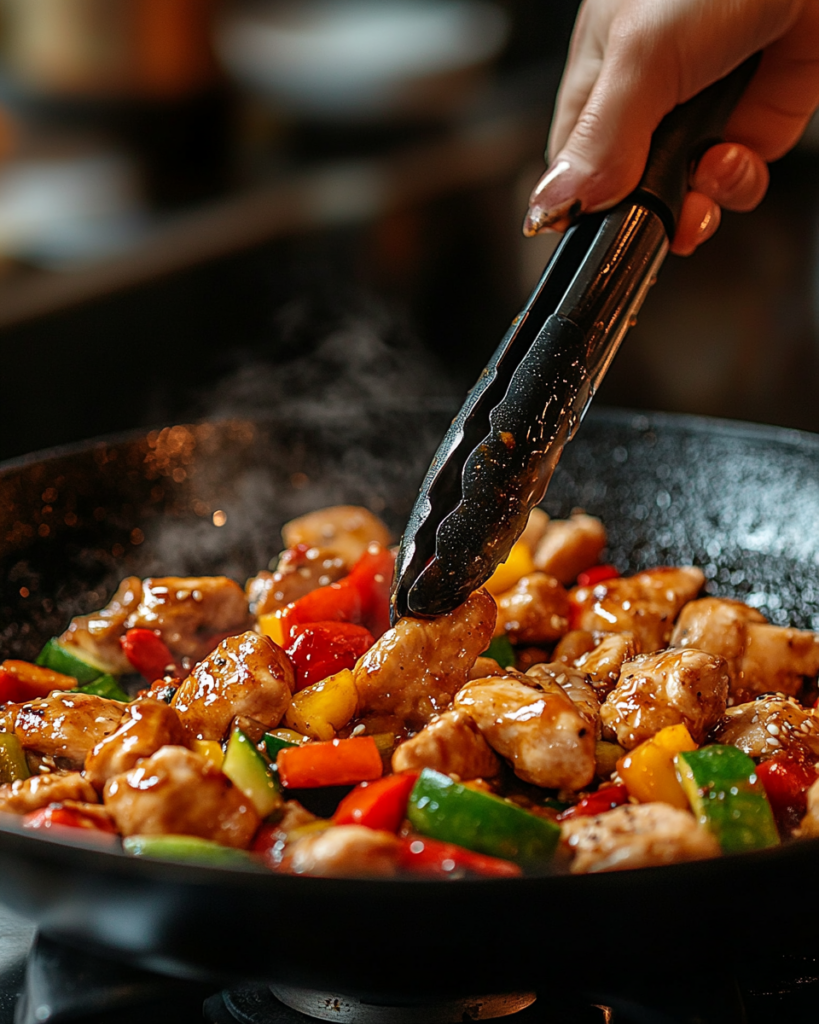
Heat 1 tablespoon of vegetable oil in a large skillet or wok over medium-high heat. Once the pan feels hot, add the chicken in a single layer. Cook for about 4 to 5 minutes, stirring occasionally, until lightly browned and fully cooked. Remove the chicken from the skillet and place it on a plate.
Add the remaining tablespoon of oil to the skillet. Place the broccoli, carrots, and bell peppers into the pan first because they require slightly longer cooking time. Stir fry for about 3 minutes. Add the snap peas and continue cooking for another 2 minutes until the vegetables become crisp-tender.
Stir in the garlic and ginger. Cook for about 30 seconds while stirring constantly. Garlic burns quickly, so avoid leaving it unattended during this step.
Return the cooked chicken to the skillet. Pour the prepared teriyaki sauce into the pan and stir everything together gently. Continue cooking for 2 to 3 minutes until the sauce thickens slightly and coats the chicken and vegetables evenly.
Drizzle sesame oil over the stir fry just before removing the skillet from the heat. Sesame oil loses flavor if cooked too long, so adding it near the end keeps its nutty aroma noticeable.
Serve the stir fry over warm rice or noodles. Sprinkle sliced green onions and sesame seeds across the top before serving.
One common mistake involves overcrowding the skillet. Too many ingredients at once lower the pan temperature and create steaming rather than browning. Cooking in batches keeps the vegetables crisp and the chicken lightly golden.
Another issue comes from overcooking the vegetables. Stir fry vegetables should still have slight firmness for the most pleasant texture. High heat and quick cooking help maintain color and freshness.
Tips, Variations & Substitutions
Chicken thighs create slightly richer flavor and remain juicy during high-heat cooking. Shrimp or thinly sliced beef also pair beautifully with teriyaki sauce and cook quickly.
Broccoli and peppers remain classic choices, though zucchini, mushrooms, cabbage, baby corn, or bok choy also fit nicely into the dish. Frozen vegetables may work during busy evenings, though fresh vegetables usually keep a firmer texture.
For extra heat, stir a small amount of red pepper flakes or sriracha into the sauce. Pineapple chunks may also bring light sweetness that balances the savory soy sauce mixture.
Brown rice or cauliflower rice work nicely beneath the stir fry. Rice noodles or lo mein noodles create a hearty variation that feels slightly richer.
Fresh garlic and ginger produce fuller flavor compared to dried alternatives. If using powdered versions, use smaller quantities because dried spices taste more concentrated.
Leftovers should remain refrigerated in an airtight container for up to three days. Reheat gently in a skillet with a splash of water to loosen the sauce slightly.
Serving Ideas & Occasions
Teriyaki Chicken Stir Fry pairs beautifully with steamed jasmine rice, brown rice, or noodles. Egg rolls, dumplings, or a light cucumber salad complement the savory flavors nicely.
This meal works especially well for busy weeknights because it cooks quickly while still feeling hearty and balanced. The colorful vegetables also create an appealing dinner presentation for casual gatherings with friends or family.
Sparkling water with lime pairs nicely alongside the savory sauce. Light soups such as miso soup also complement the meal without feeling overly heavy.
Since the recipe cooks in one skillet, cleanup remains fairly simple. That convenience makes the dish suitable for regular weekly dinner rotation.
Nutritional & Health Notes
Teriyaki Chicken Stir Fry contains lean protein, colorful vegetables, and moderate carbohydrates when paired with rice or noodles. Chicken breast supplies protein that helps create a filling and balanced meal.
Broccoli, carrots, peppers, and snap peas contribute fiber, vitamins, and texture. Stir frying vegetables quickly at fairly high heat helps preserve their color and slight crispness.
Homemade teriyaki sauce allows better control over sugar and sodium compared to many bottled sauces. Low-sodium soy sauce helps reduce salt content while still providing savory flavor.
Brown rice may add extra fiber and create a more filling meal. Cauliflower rice offers a lighter alternative for those seeking lower carbohydrate options.
Portion balance matters with stir fry dishes because rice and sauce together can become fairly filling. Pairing generous vegetables with moderate rice portions helps create a balanced plate.
FAQs
Can I prepare the sauce ahead of time?
Yes, the teriyaki sauce may be mixed several days ahead and stored in the refrigerator. Stir the mixture again before cooking because the cornstarch settles at the bottom over time. Preparing the sauce earlier saves cooking time during busy evenings and allows the garlic and ginger flavors to blend slightly. Store the sauce in a sealed container for up to five days. If the sauce thickens during refrigeration, whisk in a tablespoon of water before adding it to the skillet. Homemade sauce usually tastes fresher than bottled varieties and gives better control over sweetness and sodium levels.
What vegetables work nicely in stir fry?
Many vegetables pair beautifully with teriyaki chicken. Broccoli, bell peppers, carrots, and snap peas remain popular because they hold texture during high-heat cooking. Mushrooms, zucchini, cabbage, onions, baby corn, and bok choy also work nicely. Vegetables with high moisture content should cook briefly so they do not soften excessively. Cutting vegetables into similar sizes helps everything cook evenly. Frozen vegetables may also work for convenience, though fresh vegetables usually provide firmer texture and brighter flavor. Combining colorful vegetables creates pleasant contrast and gives the meal a fresh appearance once served.
How do I keep chicken tender during stir frying?
Thin slices help chicken cook quickly and evenly, which reduces the chance of dryness. Patting the chicken dry before cooking also helps create light browning. High heat works nicely because it cooks the outside quickly while helping the inside remain juicy. Avoid overcrowding the skillet since crowded chicken releases moisture and steams rather than browning. Once the chicken reaches safe internal temperature, remove it from the skillet promptly. Returning the chicken to the pan only near the end keeps it warm without overcooking. Chicken thighs remain especially tender because they contain slightly higher fat content.
Can I use bottled teriyaki sauce?
Bottled teriyaki sauce may work if short on time, though homemade sauce usually tastes fresher and allows better control over sweetness and sodium. Some bottled sauces contain fairly high sugar levels or thickening ingredients that create heavier texture. If using bottled sauce, taste it before adding extra soy sauce or sugar. Homemade sauce also allows adjustment depending on personal preference. Additional garlic, ginger, or rice vinegar may brighten bottled sauce if needed. Preparing homemade sauce takes only a few minutes and often creates richer flavor throughout the stir fry.
What type of pan works best?
A wok works especially well because its shape distributes heat evenly and allows quick cooking at high temperatures. A large skillet may also work nicely if a wok is unavailable. The key factor involves using a pan large enough so the ingredients spread out instead of crowding together. Stainless steel or cast iron pans create pleasant browning on the chicken and vegetables. Nonstick pans also work well for easier cleanup. Preheating the skillet properly before adding ingredients helps maintain crisp vegetables and lightly browned chicken throughout the cooking process.
Can this recipe work for meal preparation?
Yes, Teriyaki Chicken Stir Fry stores nicely for meal preparation during the week. Allow the stir fry to cool slightly before placing it into airtight containers. Refrigerate for up to three days. Rice may be stored separately if preferred. Reheat gently in a skillet or microwave with a splash of water to loosen the sauce slightly. Vegetables may soften somewhat after refrigeration, though the flavor remains satisfying. Preparing extra vegetables during cooking also helps stretch the meal into additional servings. Fresh green onions added after reheating help refresh the finished dish.
How can I thicken the sauce further?
Cornstarch already thickens the sauce slightly, though additional thickening may help if a richer coating is preferred. Mix 1 teaspoon cornstarch with 1 tablespoon cold water in a small bowl until smooth. Stir this mixture into the simmering sauce gradually while cooking. Continue stirring until the sauce thickens to the desired consistency. Avoid adding dry cornstarch directly into the skillet because it may create lumps. The sauce also thickens slightly as it cools. Cooking too long after thickening may cause vegetables to soften excessively, so remove the skillet from heat once the sauce coats the ingredients evenly.