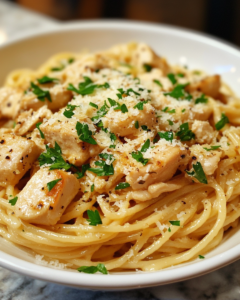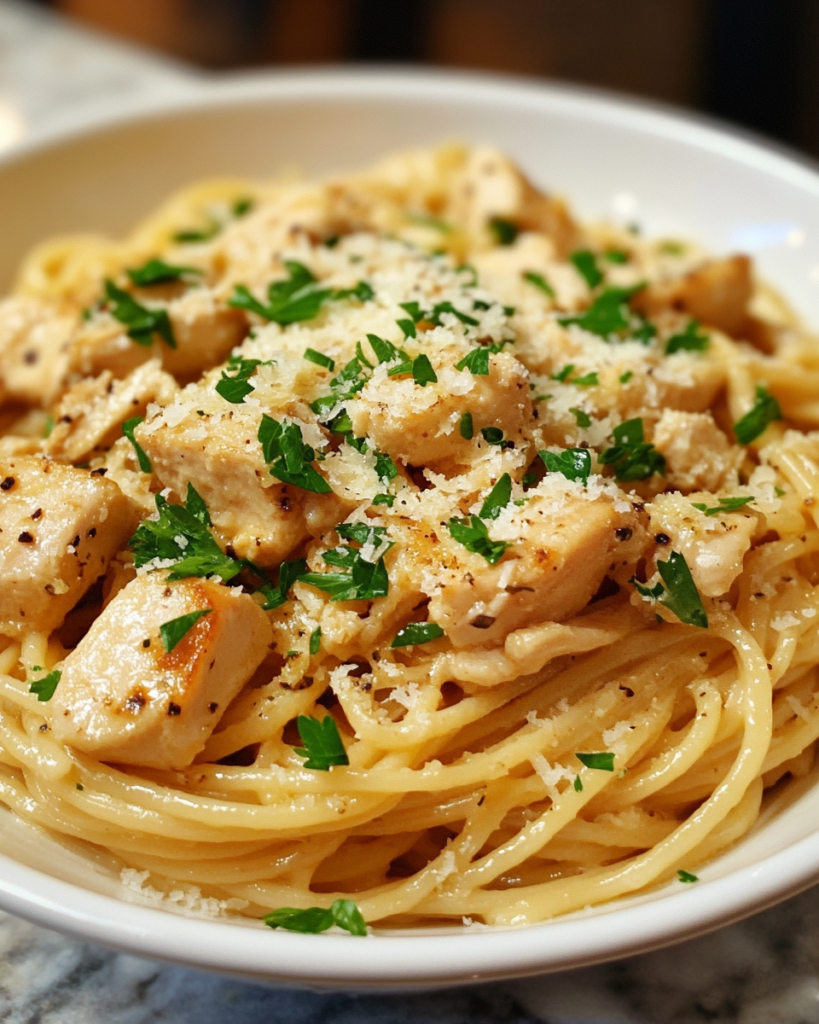
Garlic Butter Chicken Pasta brings together tender chicken, silky pasta, rich butter, and aromatic garlic in a comforting meal that fits both busy evenings and relaxed family dinners. The sauce lightly coats each strand and piece rather than becoming heavy, creating a balanced dish with savory depth and a gentle richness.
This recipe relies on pantry staples and straightforward cooking steps while still delivering restaurant-style flavor. The garlic softens in butter, the chicken develops a golden exterior, and the pasta absorbs the sauce for a satisfying finish. Fresh herbs and a touch of cheese round everything out and add freshness to every forkful.
Ingredients Overview
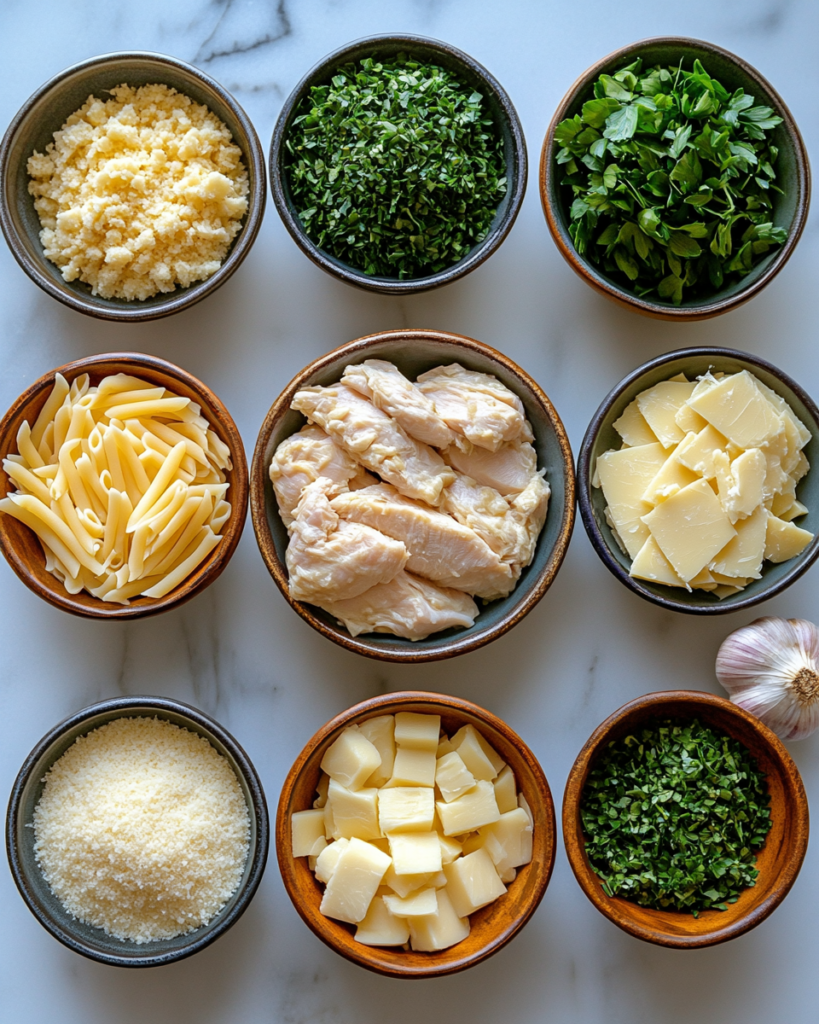
The strength of Garlic Butter Chicken Pasta comes from a short list of familiar ingredients working together in balanced proportions. Chicken breast is a practical choice because it cooks quickly and stays tender when sliced evenly. Chicken thighs may also be used for a richer result and slightly deeper flavor.
Butter forms the foundation of the sauce. It carries the garlic throughout the dish and gives the pasta its smooth texture. Using unsalted butter allows easier control over seasoning. Garlic should be fresh rather than powdered because freshly minced cloves soften into the butter and create the signature aroma.
Pasta acts as the base that holds the sauce. Fettuccine and linguine work especially well because their shape catches the buttery coating, though penne or rotini also perform nicely. Cooking the pasta until just tender helps it finish in the pan without becoming overly soft.
A small amount of chicken broth adds moisture and helps create a light sauce without relying entirely on butter. Parmesan contributes saltiness and body while fresh parsley cuts through the richness with a clean finish.
Olive oil supports browning and prevents the butter from overheating during cooking. Black pepper and paprika add warmth without overwhelming the garlic. If desired, a splash of cream can be added for a fuller sauce, though the classic version remains lighter and focused on butter and garlic.
Ingredients
12 ounces fettuccine pasta
2 large boneless skinless chicken breasts, sliced into strips
2 tablespoons olive oil
4 tablespoons unsalted butter
6 cloves garlic, minced
1 teaspoon paprika
1 teaspoon salt
1/2 teaspoon black pepper
1/2 cup low-sodium chicken broth
3/4 cup freshly grated Parmesan cheese
2 tablespoons chopped fresh parsley
1 tablespoon lemon juice
Step-by-Step Instructions
Begin by bringing a large pot of salted water to a rolling boil. Add the pasta and cook according to package directions until just tender. Reserve 1 cup of pasta water before draining.
While the pasta cooks, prepare the chicken. Slice the chicken into even strips so each piece cooks at the same rate. Pat dry with paper towels, then season with salt, pepper, and paprika.
Place a large skillet over medium-high heat. Add olive oil and allow it to warm. Arrange the chicken in a single layer and cook for about 3 to 4 minutes per side. Avoid moving the pieces too early because contact with the pan helps develop color. Cook until the outside turns lightly golden and the center reaches a safe internal temperature of 165°F.
Transfer the cooked chicken to a plate and reduce the heat to medium. Add butter to the same skillet. Once melted, stir in the minced garlic. Cook for about 30 to 45 seconds. Garlic should soften and become fragrant but not darken. Burned garlic creates bitterness and changes the character of the sauce.
Pour in the chicken broth and gently scrape the bottom of the pan to release flavorful browned bits. Simmer briefly until slightly reduced.
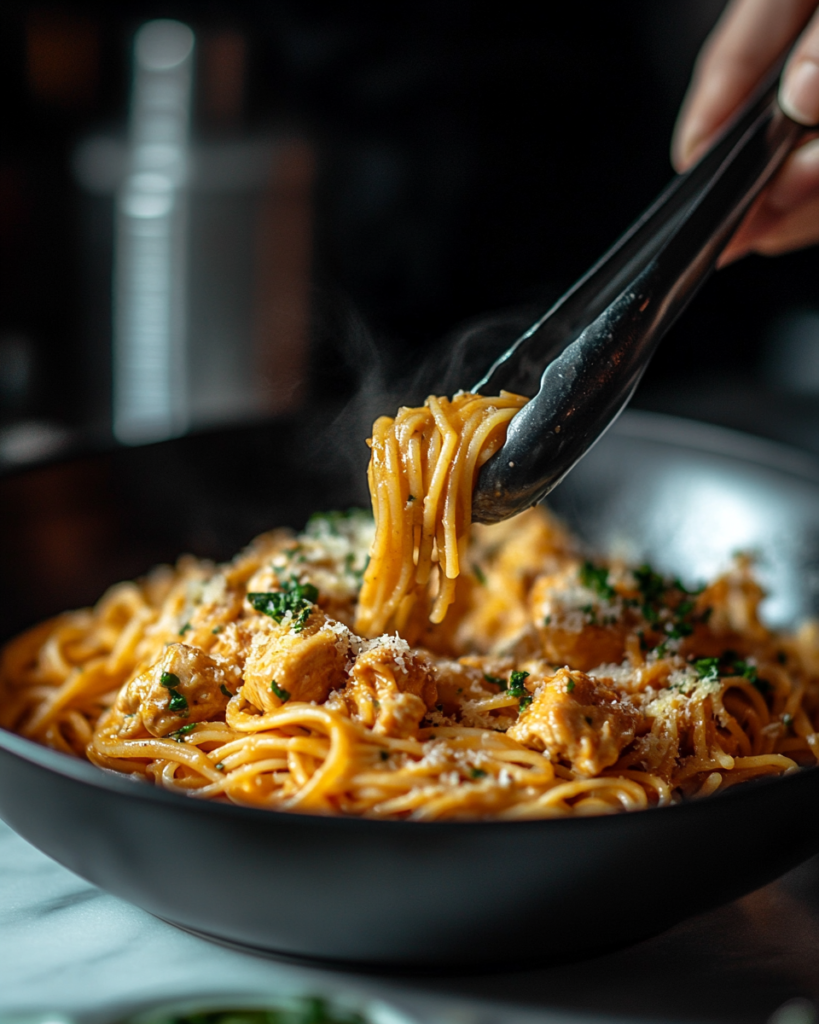
Return the chicken to the skillet. Add the drained pasta and toss thoroughly so the noodles become coated with the butter mixture. Sprinkle in Parmesan gradually while stirring. Add reserved pasta water a few tablespoons at a time until the sauce becomes glossy and lightly coats the pasta.
Stir in lemon juice and parsley during the final minute of cooking. Taste and adjust seasoning if necessary.
Serve immediately while warm. If the pasta sits too long, the sauce may tighten. A small splash of warm broth or reserved pasta water restores the texture.
Common issues include overcrowding the pan, overcooking chicken, or adding cheese too quickly. Working in stages keeps the sauce smooth and prevents clumping.
Tips, Variations & Substitutions
Thin chicken slices cook quickly and remain juicy. If thicker pieces are used, lower the heat slightly after browning to finish cooking without drying.
For extra richness, stir in 1/4 cup heavy cream after adding the broth. This creates a fuller sauce while keeping the garlic flavor clear.
Chicken thighs can replace chicken breast for a deeper savory profile. Shrimp is another suitable option and requires only a few minutes of cooking.
Gluten-free pasta performs well in this recipe. Cook carefully and reserve additional pasta water because gluten-free varieties can absorb more liquid after draining.
For extra vegetables, add spinach during the final minute or include sautéed mushrooms after cooking the chicken. Broccoli florets also pair well with the buttery sauce.
Freshly grated Parmesan melts more smoothly than pre-shredded versions. If dairy reduction is preferred, reduce the cheese slightly and increase broth.
Fresh parsley brings freshness, though chopped chives or basil can also complement the dish.
Serving Ideas & Occasions
Garlic Butter Chicken Pasta fits a wide range of meals. It works beautifully for weeknight dinners because preparation remains manageable and cooking moves quickly.
Serve with warm bread to capture the remaining sauce. A crisp green salad with a mild vinaigrette balances the richness of the butter and cheese.
Roasted vegetables such as asparagus, zucchini, or green beans pair naturally with the savory profile. For drinks, sparkling water with lemon or lightly chilled iced tea keeps the meal balanced.
This dish also suits casual gatherings because it can be served family style in a large bowl. It feels comforting enough for cooler evenings while remaining light enough for warmer seasons.
Nutritional & Health Notes
Garlic Butter Chicken Pasta provides a combination of protein, carbohydrates, and fat in a single meal. Chicken supplies lean protein that contributes fullness and structure to the dish.
Butter and Parmesan provide richness and flavor while also contributing fat and calcium. Moderating portion size keeps the meal balanced without losing satisfaction.
Adding vegetables increases fiber and introduces additional texture and color. Whole wheat pasta may also be substituted to increase fiber content.
Using reduced-sodium broth allows better control of overall salt levels. The lemon juice adds brightness and can reduce the need for additional seasoning.
Because the sauce is built primarily from butter and broth rather than large amounts of cream, the finished dish remains rich yet relatively balanced.
FAQs
Can I prepare Garlic Butter Chicken Pasta ahead of time?
This recipe can be prepared ahead with a few adjustments. Cook the chicken and pasta separately, then store them in airtight containers. Keep the sauce components separate when possible. Reheat gently in a skillet with a splash of broth or water so the pasta loosens and regains its texture. Add Parmesan only during reheating for the smoothest finish. Fresh parsley should also be added at the end rather than during storage.
Which pasta shape works best?
Long noodles such as fettuccine and linguine hold the garlic butter sauce particularly well because the coating spreads evenly across the strands. Short shapes such as penne and rotini also work and may be easier for serving families. Choose pasta with enough surface texture to catch the butter and cheese mixture. Avoid very delicate pasta shapes that can become soft during tossing.
Can I freeze leftovers?
Freezing is possible, though texture changes slightly after thawing. Cool the dish completely before transferring to freezer-safe containers. Freeze for up to two months. Thaw overnight in the refrigerator and reheat slowly in a skillet with broth or water. Stir frequently to bring the sauce back together. Fresh herbs and a small amount of cheese added after reheating improve the final result.
How do I keep the chicken tender?
Even slicing and proper heat management are important. Pat the chicken dry before cooking and avoid placing cold meat directly into the skillet if possible. Cook only until the internal temperature reaches 165°F. Rest the chicken briefly before combining it with the pasta. Overcooking removes moisture and produces a firmer texture.
Can I add vegetables?
Vegetables work very well in this dish. Spinach, mushrooms, broccoli, peas, and asparagus all blend naturally with the garlic butter profile. Cook firmer vegetables before adding the sauce so they remain tender without becoming watery. Leafy greens should be stirred in at the end to preserve texture.
Why did my sauce become oily?
An oily sauce usually means the ingredients were added too quickly or the heat remained too high. Lower the heat before adding cheese and stir continuously while combining the pasta. Reserved pasta water helps emulsify the butter and broth into a smoother coating. Gradual mixing creates a silkier result.
Is this recipe suitable for gatherings?
Yes. Garlic Butter Chicken Pasta scales well for larger meals because the ingredients remain straightforward and cooking steps stay manageable. Prepare the chicken in batches if needed so it browns evenly. Keep extra broth available during serving because pasta absorbs sauce as it rests. Garnish with parsley and Parmesan just before bringing it to the table.
………………..