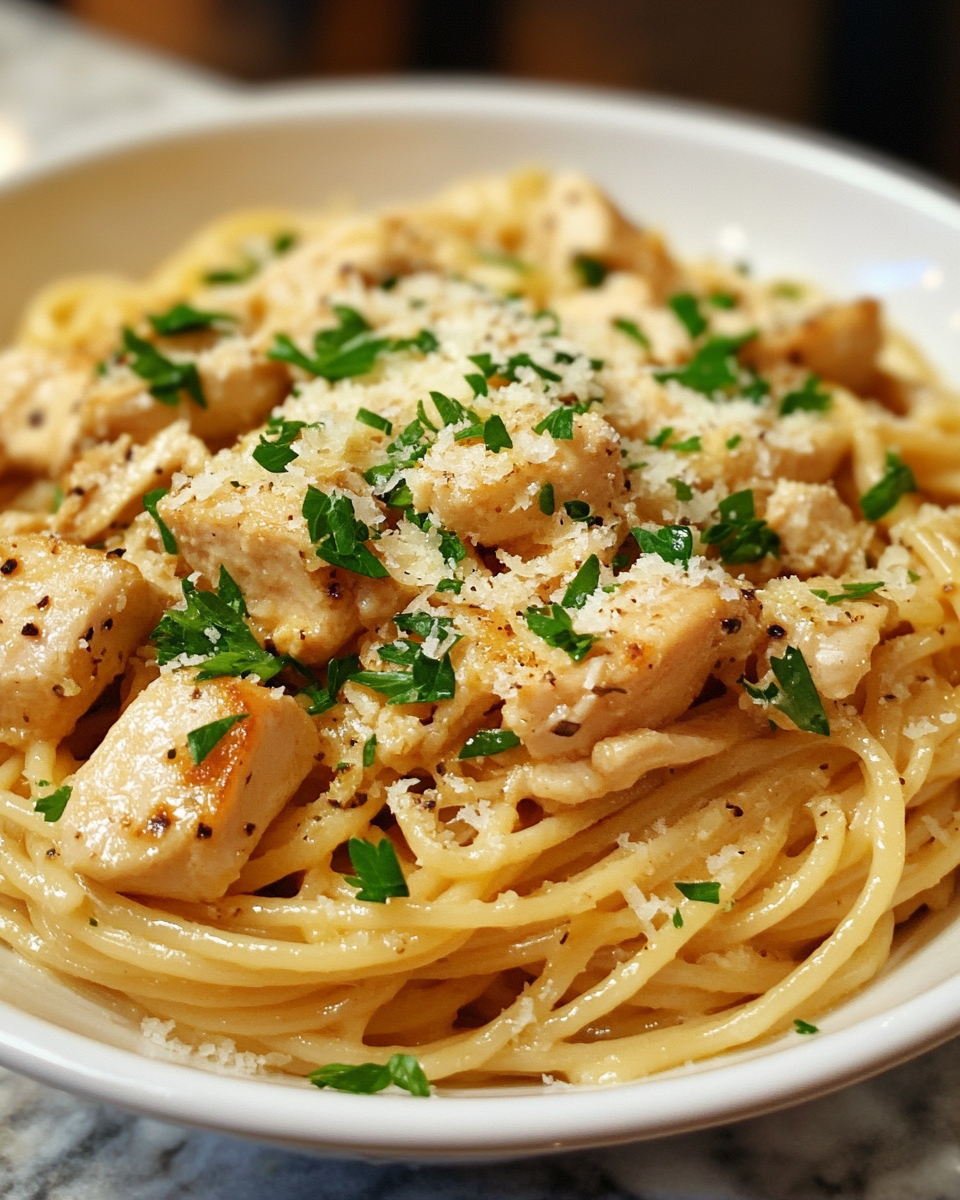
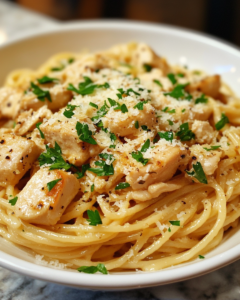
This creamy garlic chicken pasta is a fast, comforting dinner that brings tender chicken, silky sauce, and perfectly coated pasta together in one pan. It’s the kind of dish that feels rich and satisfying while still fitting neatly into a busy evening routine.
The garlic-infused cream sauce clings to every strand of pasta, while golden chicken pieces add savory depth. Each bite balances smooth, savory, and lightly cheesy notes without feeling heavy or complicated.
Whether it’s a weeknight dinner or a casual meal shared at home, this dish delivers warmth and comfort with simple cooking steps and familiar ingredients.
Ingredients Overview

This recipe relies on everyday ingredients that work together to build a creamy, well-rounded pasta dish. Chicken breast is the main protein, offering a lean and tender base when cooked properly. Cutting it into even pieces helps it brown quickly and stay juicy.
Garlic is the flavor foundation. When gently sautéed, it releases a deep aroma that blends into the sauce without overpowering it. Fresh garlic is preferred over pre-minced versions for a fuller taste.
Heavy cream creates the smooth texture of the sauce. It thickens slightly as it simmers, coating the pasta evenly. If a lighter version is preferred, half-and-half can be used, though the sauce will be slightly thinner.
Parmesan cheese adds a salty, nutty depth that enhances the creaminess. It also helps the sauce cling to the pasta. Freshly grated cheese melts more smoothly than pre-packaged versions.
Pasta such as fettuccine or penne works well because it holds onto the sauce. Olive oil, butter, salt, and pepper round out the base flavors, while a touch of pasta water helps bring everything together into a silky finish.
Ingredients
12 ounces fettuccine or penne pasta
1 pound boneless skinless chicken breast, cut into bite-sized pieces
2 tablespoons olive oil
2 tablespoons unsalted butter
5 cloves garlic, minced
1 teaspoon salt
1/2 teaspoon black pepper
1 teaspoon Italian seasoning
1 1/4 cups heavy cream
1 cup chicken broth
3/4 cup freshly grated Parmesan cheese
1/2 cup pasta cooking water (reserved)
1 tablespoon chopped fresh parsley (optional)
Step-by-Step Instructions

Start by bringing a large pot of salted water to a boil. Cook the pasta according to package directions until al dente. Before draining, reserve about half a cup of pasta water. Drain the rest and set the pasta aside.
While the pasta cooks, season the chicken pieces with salt, pepper, and Italian seasoning. Heat olive oil in a large skillet over medium-high heat. Add the chicken in a single layer and cook until golden on the outside and fully cooked through, about 6 to 8 minutes. Remove the chicken from the pan and set aside.
In the same skillet, reduce heat to medium and add butter. Once melted, stir in the minced garlic. Cook gently for about 30 to 60 seconds until fragrant, keeping the garlic from browning too quickly.
Pour in the chicken broth and stir, scraping up any browned bits from the bottom of the pan. These bits add depth to the sauce. Let the broth simmer for 2 to 3 minutes so it reduces slightly.
Add the heavy cream and stir until the mixture becomes smooth. Allow it to simmer gently for another 3 to 4 minutes, letting it thicken slightly. Keep the heat moderate so the cream does not boil too vigorously.
Stir in the Parmesan cheese gradually, mixing until it melts into the sauce. The texture should become creamy and slightly thick. If it feels too thick, add a splash of reserved pasta water until it reaches a silky consistency.
Return the cooked chicken to the skillet and stir to coat it in the sauce. Add the drained pasta and toss everything together until the noodles are fully covered.
Let the pasta sit in the sauce for 1 to 2 minutes over low heat so the flavors blend together. Add more pasta water if needed to loosen the sauce.
Finish with chopped parsley if desired and serve immediately while warm and creamy.
A common mistake is overheating the cream, which can cause separation. Keeping the heat moderate helps maintain a smooth sauce. Another key point is seasoning in layers, which builds a richer final taste.
Tips, Variations & Substitutions
For a deeper flavor, let the chicken sit in seasoning for 10 to 15 minutes before cooking. This helps the spices absorb into the meat.
If you want a slightly lighter version, replace half of the heavy cream with milk. The sauce will be less thick but still smooth when combined with cheese and pasta water.
Vegetables can be added easily. Spinach, mushrooms, or steamed broccoli blend well into the sauce and add extra texture. Add them during the final mixing stage so they keep their structure.
For a stronger garlic flavor, add an extra clove or two during the sauté step. For a milder taste, cook the garlic slightly longer at lower heat so it softens.
Different pasta shapes also work well. Short pasta like rigatoni or rotini holds the sauce in its ridges, while long pasta creates a smoother coating experience.
Leftovers can be stored in the refrigerator and reheated gently with a splash of broth or milk to restore creaminess.
Serving Ideas & Occasions
This pasta pairs well with simple sides like a green salad, roasted vegetables, or warm bread. The creamy sauce balances nicely with lighter, crisp textures on the side.
It works well for casual dinners, family meals, or when you want something comforting without spending too long in the kitchen. It also fits nicely into meal prep since it reheats well.
For drinks, a chilled sparkling water with lemon or a light iced tea complements the richness of the dish without overpowering it.
Nutritional & Health Notes
This dish provides a balanced mix of protein from chicken, carbohydrates from pasta, and fats from cream and cheese. It is filling and satisfying, making it suitable for a full meal.
Portion size plays an important role in keeping it balanced. Pairing it with vegetables or a salad adds fiber and freshness to the plate.
For those looking to reduce fat content, lighter dairy options can be used, though the texture will be slightly less rich. Chicken breast keeps the protein lean while still being flavorful when properly seasoned.
FAQs
Can I use a different type of pasta?
Yes, many pasta shapes work well in this dish. Fettuccine, penne, rigatoni, or even spaghetti can be used. The key is choosing a shape that holds sauce well so every bite stays creamy and flavorful. Short pasta tends to capture more sauce in its ridges, while long pasta gives a smoother coating. Cooking time may vary slightly depending on the type, so always check for al dente texture before draining.
What can I use instead of heavy cream?
Half-and-half or whole milk can be used as a substitute, though the sauce will be lighter and less thick. If using milk, adding a bit more Parmesan helps maintain creaminess. Another option is evaporated milk, which provides a richer texture without being as heavy as cream. Adjusting the simmer time also helps control thickness, allowing the sauce to reach the desired consistency.
Can I prepare this dish ahead of time?
Yes, but it is best enjoyed fresh. If preparing ahead, store the sauce and pasta separately when possible. This helps maintain texture and prevents the pasta from absorbing too much liquid. When reheating, add a splash of broth or milk to bring back creaminess. Warm gently over low heat to avoid breaking the sauce.
How do I keep the sauce from separating?
Keeping the heat at a steady medium or lower level is important. High heat can cause the cream to break and become grainy. Adding cheese slowly while stirring also helps maintain smoothness. If the sauce thickens too much, pasta water can be added gradually to restore balance without affecting texture.
Can I add vegetables to this pasta?
Yes, vegetables work very well in this recipe. Spinach, mushrooms, broccoli, or even peas blend nicely with the creamy sauce. Add them toward the end of cooking so they stay tender but not overcooked. This also adds color, texture, and a slight freshness to balance the richness of the dish.
What type of chicken works best?
Boneless, skinless chicken breast is commonly used because it cooks quickly and stays tender when not overcooked. Chicken thighs can also be used for a richer flavor and slightly juicier texture. Regardless of the cut, even sizing helps ensure uniform cooking and better browning in the skillet.
How can I make the sauce thicker?
If the sauce feels too thin, let it simmer for a few extra minutes so it reduces naturally. Adding more Parmesan cheese also helps thicken it while enhancing flavor. Another method is to use a bit less broth or cream at the start, then adjust consistency later with reserved pasta water if needed.