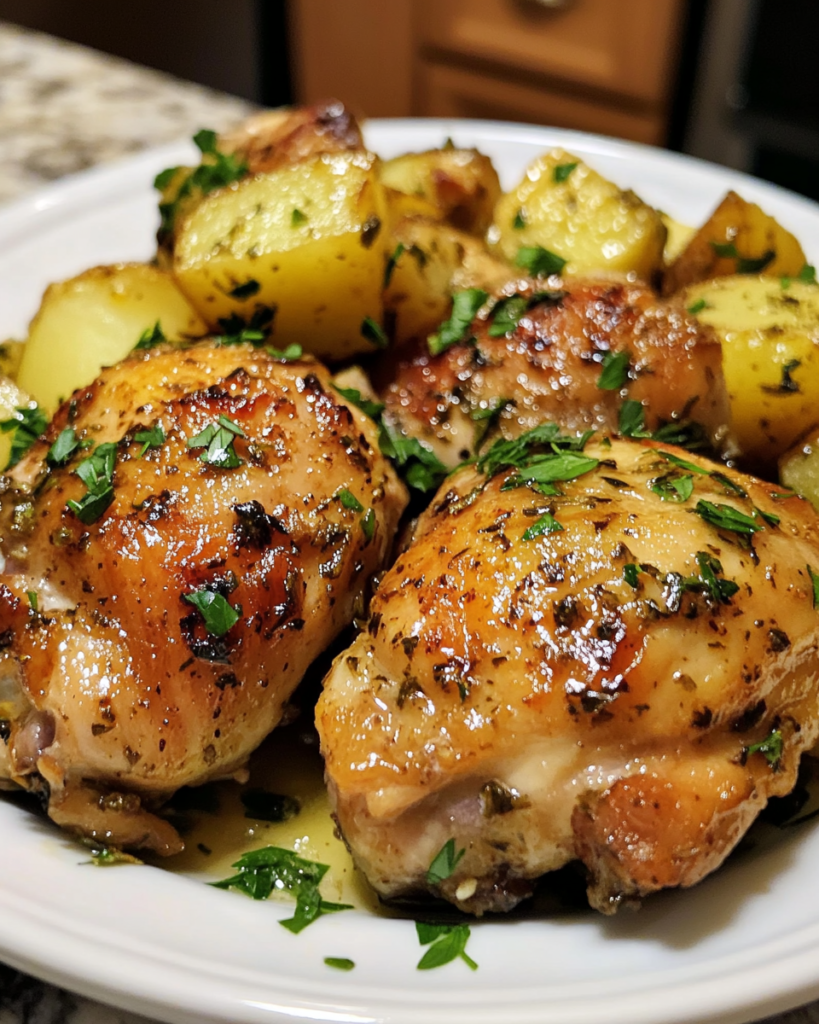
One Pan Garlic Herb Chicken brings together juicy chicken, tender potatoes, and fragrant herbs in a single skillet for a comforting dinner with very little cleanup. The garlic gently softens while fresh herbs perfume the pan, creating rich flavor in every bite. This style of cooking suits busy evenings because the entire meal cooks together while the ingredients absorb the savory pan juices.
The chicken develops a lightly golden surface while the vegetables turn soft and flavorful beneath it. A splash of broth keeps everything moist and helps the garlic and herbs coat each ingredient evenly. Since everything cooks in the same pan, the flavors blend naturally without extra effort.
This dish also works well for family dinners, meal prep, or casual gatherings. The ingredients remain simple, yet the finished skillet dinner tastes hearty and satisfying. Fresh parsley and thyme brighten the savory garlic base while lemon adds gentle freshness near the end of cooking.
Ingredients Overview
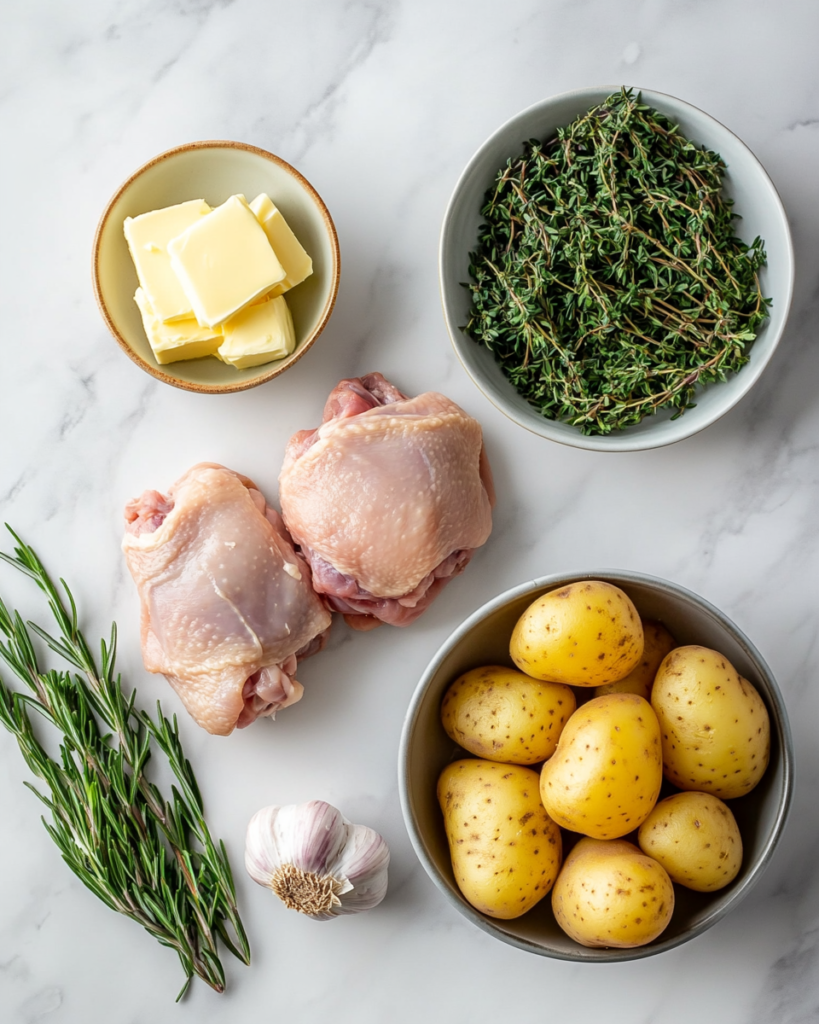
Chicken thighs work especially well for One Pan Garlic Herb Chicken because they stay tender during roasting and carry flavor beautifully. Boneless chicken breasts also work, though they cook slightly faster and can dry out if left in the oven too long. Skin-on chicken creates richer flavor because the rendered fat coats the vegetables during cooking.
Garlic forms the foundation of the dish. Fresh garlic cloves soften in the pan and release a mellow aroma during roasting. Dried garlic powder can work in a pinch, though fresh cloves provide deeper flavor and better texture.
Baby potatoes absorb the herb-infused broth while turning creamy inside. Yukon Gold potatoes offer a similar texture if baby potatoes are unavailable. Carrots add slight sweetness and balance the savory chicken and garlic.
Fresh herbs bring freshness and depth. Thyme pairs naturally with roasted chicken, while parsley brightens the finished skillet. Rosemary can replace thyme for a stronger herbal profile. Italian seasoning also works for convenience.
Chicken broth keeps the pan moist and forms a light sauce as the ingredients roast together. A small squeeze of lemon near the end balances the richness and lifts the garlic flavor without overpowering the dish.
Olive oil helps the chicken brown while carrying the herb flavors throughout the pan. Butter can replace part of the oil for a richer finish. A sprinkle of paprika adds subtle warmth and color without turning the dish spicy.
The balance between protein, vegetables, herbs, and broth creates a complete skillet dinner with comforting texture and savory flavor in every forkful.
Ingredients
6 bone-in chicken thighs
1 1/2 pounds baby potatoes, halved
3 medium carrots, sliced
8 garlic cloves, minced
2 tablespoons olive oil
1 tablespoon butter
1 teaspoon salt
1/2 teaspoon black pepper
1 teaspoon paprika
1 teaspoon dried thyme
1 teaspoon dried parsley
1/2 teaspoon onion powder
1 cup chicken broth
1 tablespoon lemon juice
2 tablespoons chopped fresh parsley
1 tablespoon fresh thyme leaves
Lemon wedges for serving
Step-by-Step Instructions
Preheat the oven to 400 degrees Fahrenheit. Pat the chicken thighs dry with paper towels. Dry chicken browns far better than damp chicken, so this step matters for texture and appearance.
Place the chicken in a large bowl. Drizzle with olive oil and season with salt, pepper, paprika, thyme, parsley, and onion powder. Rub the seasoning evenly across each piece.
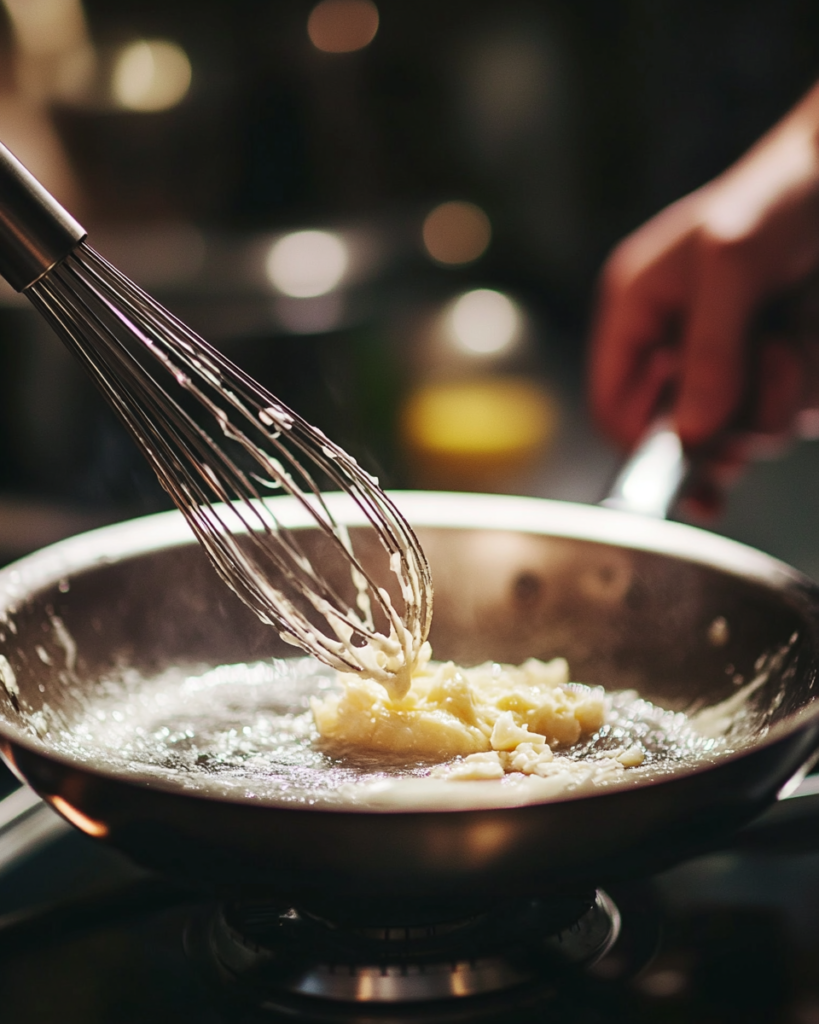
Heat a large oven-safe skillet over medium-high heat. Add the butter and allow it to melt fully. Arrange the chicken thighs skin-side down in the hot skillet. Cook for about 4 to 5 minutes until the surface turns golden brown. Flip the chicken and cook another 2 minutes. Transfer the chicken briefly to a plate.
Add the potatoes and carrots directly into the skillet. Stir them through the pan drippings so they absorb the garlic and herb flavor. Cook for about 4 minutes while stirring occasionally. Add the minced garlic during the final minute so it softens without burning.
Pour the chicken broth into the skillet and gently scrape the bottom with a wooden spoon. Those browned bits contain rich flavor that blends into the broth.
Nestle the chicken back into the skillet over the vegetables. Transfer the skillet to the oven uncovered.
Roast for 30 to 35 minutes, depending on the size of the chicken thighs. The chicken should reach an internal temperature of 165 degrees Fahrenheit. The potatoes should feel fork-tender, and the broth should reduce slightly into a light sauce.
If the chicken skin needs additional color, switch the oven to broil for 2 to 3 minutes near the end. Watch closely because garlic can darken quickly under direct heat.
Remove the skillet from the oven and drizzle with lemon juice. Scatter fresh parsley and thyme across the top before serving.
Avoid overcrowding the skillet because crowded ingredients steam instead of roast. Use a large enough pan so the chicken and vegetables sit comfortably in a single layer.
Allow the chicken to rest for several minutes before serving. This short resting period helps the juices settle back into the meat for a more tender texture.
Tips, Variations & Substitutions
Boneless chicken thighs cook slightly faster than bone-in pieces and still remain juicy. Chicken breasts also work well, though checking the internal temperature carefully helps prevent dryness.
For extra vegetables, add green beans, mushrooms, zucchini, or Brussels sprouts during the final portion of roasting. Softer vegetables require less cooking time than potatoes and carrots.
Fresh herbs provide brighter flavor, though dried herbs remain practical for weeknight cooking. When using fresh herbs, roughly triple the quantity listed for dried herbs.
A sprinkle of grated Parmesan over the finished skillet adds savory richness. Crushed red pepper flakes can bring gentle heat for anyone who enjoys a spicier dinner.
Sweet potatoes create a slightly sweeter version of the dish and pair nicely with rosemary. Small red potatoes also roast beautifully while holding their shape.
For dairy-free preparation, simply omit the butter and rely entirely on olive oil. Gluten-free preparation remains simple because the recipe naturally contains no flour or breadcrumbs.
Store leftovers in an airtight container for up to four days. Reheat gently in the oven or skillet with a splash of broth to keep the chicken moist.
This recipe also works nicely for meal prep because the flavors deepen slightly after resting overnight in the refrigerator.
Serving Ideas & Occasions
One Pan Garlic Herb Chicken pairs beautifully with crusty bread that can soak up the savory garlic broth from the skillet. A crisp green salad with lemon vinaigrette adds freshness beside the rich roasted chicken and potatoes.
Steamed green beans or roasted asparagus also complement the herbal flavors nicely. For colder evenings, serve the skillet alongside creamy soup or buttered rice for a heartier dinner spread.
Sparkling water with lemon or iced tea balances the savory richness without overpowering the herbs. White wines such as Sauvignon Blanc or Pinot Grigio also pair comfortably with garlic and roasted chicken.
This dish fits casual family dinners, Sunday suppers, meal prep sessions, and relaxed gatherings with friends. Since everything cooks together in a single pan, it remains practical for busy schedules while still feeling warm and satisfying at the table.
The rustic presentation also suits cozy fall and winter meals when comforting skillet dinners feel especially inviting.
Nutritional & Health Notes
One Pan Garlic Herb Chicken contains balanced protein, vegetables, and carbohydrates in a single skillet meal. Chicken thighs provide protein and satisfying richness while potatoes contribute filling carbohydrates for steady energy.
Garlic and herbs add flavor naturally, helping reduce reliance on heavy sauces. Olive oil contributes heart-friendly fats while carrots supply fiber and vitamin A.
Using skinless chicken can lower the overall fat content slightly. Additional vegetables such as broccoli or green beans can further increase fiber and nutrient variety.
Because the dish roasts instead of deep frying, it remains lighter than many traditional comfort meals. The broth-based sauce also keeps the skillet moist without requiring cream or excessive butter.
Portion size still matters, particularly when serving with bread or rice. Pairing the dish with fresh vegetables or salad creates a balanced plate with varied texture and flavor.
Homemade broth can help lower sodium levels if preferred. Fresh herbs also brighten the dish naturally while contributing subtle nutritional value.
FAQs
Can I prepare One Pan Garlic Herb Chicken ahead of time?
Yes. The vegetables can be chopped and the chicken seasoned several hours before cooking. Store everything separately in the refrigerator until ready to cook. This preparation shortens the active cooking portion considerably during busy evenings.
The fully cooked dish also reheats well. Store leftovers in airtight containers and refrigerate for up to four days. Reheat gently in the oven at 350 degrees Fahrenheit with a spoonful of broth to keep the chicken moist. Microwaving works too, though the chicken skin softens slightly during reheating.
Many cooks find the flavor even richer the following day because the garlic and herbs continue blending together while resting overnight.
Which chicken cut works best for this recipe?
Bone-in chicken thighs remain the preferred option because they stay juicy and flavorful during roasting. The skin also turns lightly crisp while protecting the meat from drying out.
Boneless thighs work nicely for faster cooking and easier serving. Chicken breasts remain another practical choice, though they require careful timing because lean meat cooks more quickly than dark meat.
Drumsticks also roast beautifully in this skillet format. Regardless of the cut selected, using a thermometer helps achieve accurate doneness without overcooking the chicken.
For balanced cooking, try selecting pieces that appear similar in size so everything finishes at roughly the same time.
Can I freeze One Pan Garlic Herb Chicken?
Yes. Allow the skillet dinner to cool fully before transferring portions into freezer-safe containers. Freeze for up to three months for best texture and flavor.
Thaw overnight in the refrigerator before reheating. Warm the dish gently in the oven with a small splash of broth so the potatoes and chicken remain moist.
The vegetables soften slightly after freezing, though the overall flavor still tastes comforting and savory. Fresh parsley added after reheating helps refresh the finished meal.
Avoid freezing the dish repeatedly because repeated thawing can affect both texture and food quality.
How do I keep the chicken from drying out?
Patting the chicken dry before browning helps create color while sealing in moisture. Bone-in thighs naturally remain juicy during roasting, making them very forgiving for home cooking.
Avoid cooking at extremely high temperatures for extended periods. Checking the internal temperature near the end of roasting prevents overcooking. Once the chicken reaches 165 degrees Fahrenheit, remove the skillet from the oven promptly.
Allowing the chicken to rest briefly before serving also helps the juices redistribute throughout the meat instead of spilling onto the plate immediately after cutting.
Keeping broth in the skillet throughout roasting also contributes gentle moisture during cooking.
Can I add extra vegetables to the skillet?
Absolutely. This recipe adapts easily to seasonal produce and personal preference. Green beans, mushrooms, zucchini, Brussels sprouts, and broccoli all work comfortably in the skillet.
Hard vegetables such as potatoes and carrots require longer roasting, so they should enter the pan earlier. Softer vegetables cook faster and should be added later during roasting to avoid mushy texture.
Balancing the pan carefully matters because overcrowding prevents proper roasting. If adding several vegetables, consider using a larger skillet or sheet pan for better airflow and browning.
Fresh herbs scattered over the finished vegetables bring additional freshness and aroma.
What type of skillet should I use?
A large oven-safe skillet works best for One Pan Garlic Herb Chicken. Cast iron skillets hold heat extremely well and create beautiful browning on the chicken and vegetables.
Heavy stainless steel skillets also perform nicely as long as they remain oven-safe. Avoid pans with plastic handles unless specifically labeled safe for oven use.
The skillet should hold all ingredients comfortably in a single layer. Crowding traps steam and prevents proper roasting. If necessary, use a roasting pan or baking dish instead.
A wider pan generally creates richer browning because the ingredients have more contact with direct heat.
Can I turn this recipe into a lighter meal?
Yes. Skinless chicken thighs or chicken breasts reduce overall fat while still providing satisfying protein. Increasing the vegetable quantity also creates a lighter balance throughout the skillet.
Extra zucchini, broccoli, cauliflower, or green beans add volume without significantly increasing calories. Using olive oil alone instead of combining it with butter also slightly reduces richness.
Serving the chicken with salad instead of bread or rice creates a lighter plate while still keeping the meal filling and flavorful.
Fresh lemon juice and herbs brighten the dish naturally, helping the skillet taste vibrant without relying on heavy sauces or cream-based ingredients.